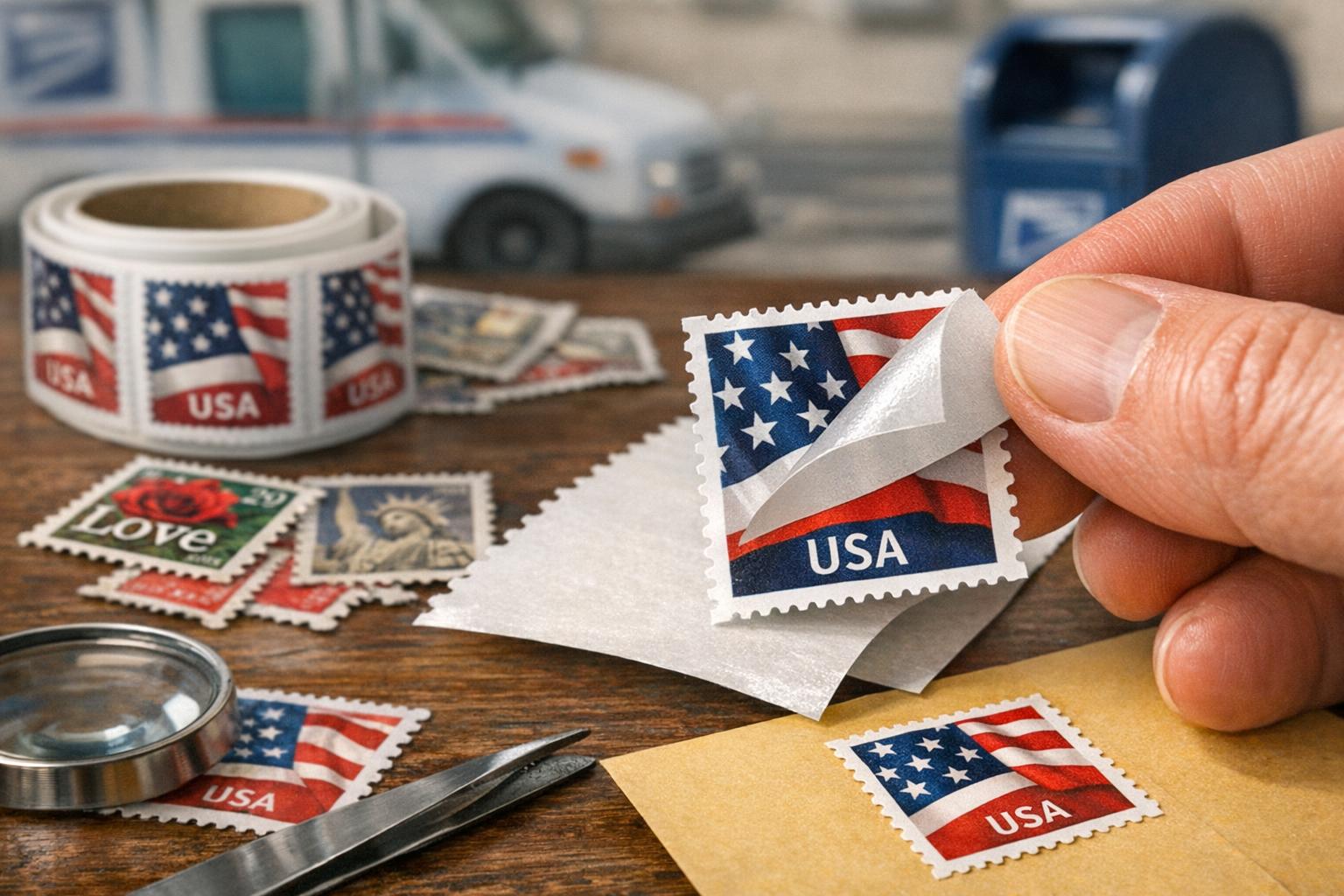
## When Did Self-Adhesive Stamps Start: A Modern USPS Milestone
The question of when did self-adhesive stamps start intersects technological innovation, collector preference, and postal operational needs. The United States Postal Service (USPS) moved from water-activated gummed stamps to pressure-sensitive labels in response to convenience and modern production methods. Understanding this shift requires situating the change in the broader usps stamp history and recognizing incremental experiments that preceded full-scale adoption.
### Early Innovations And The Path To Pressure-Sensitive Labels
Gummed stamps dominated postage production for over a century. Early adhesive experiments in the mid-20th century sought to eliminate the need for moistening, leading manufacturers and postal authorities to trial pressure-sensitive adhesives commonly used in commercial labeling. In the context of usps stamp history, these experiments were initially cautious: collectors and postal workers raised concerns about permanence, adhesion over time, and interactions with album mounts.
### The First USPS Trials And Public Releases
When did self-adhesive stamps start in the United States? The USPS began limited trials in the 1970s, issuing a small number of pressure-sensitive stamps to evaluate performance under mail-handling conditions and consumer response. These early issues were important test cases. They demonstrated that pressure-sensitive adhesives could withstand automated processing and diverse environmental conditions, albeit with some reservations from philatelic organizations.
### Expansion, Controversy, And Wider Adoption
By the 1980s and 1990s, the question of when did self-adhesive stamps start expanded from experimental issues to broader programmatic use. The USPS gradually increased the number and variety of pressure-sensitive issues. Collectors voiced concerns about long-term stability, the potential for adhesive migration, and how the new materials interacted with traditional mounting methods. Those concerns were part of usps stamp history and led to gradual refinements in adhesive chemistry and paper substrates.
### Technological Improvements And Mass Deployment
Improvements in adhesive formulations and facestock technology addressed many early objections. By the mid-1990s and into the 2000s, production techniques produced self-adhesive labels with greater archival stability. Consequently, the USPS adopted these stamps more broadly. When did self-adhesive stamps start becoming the norm? Although initial experiments date to the 1970s, widespread public use and routine issuance by the USPS accelerated in the 1990s and became commonplace in the 2000s.
### Philatelic Response And Conservation Considerations
Collectors and archivists documented the transition carefully. From a usps stamp history perspective, the move to pressure-sensitive adhesives marked one of the more consequential material changes in modern US postage. Philatelic societies published guidelines for handling and preserving these stamps, recommending alternatives to traditional hinging methods and advising on album mounts designed for self-adhesive surfaces.
### Practical Remedy: Removing Self-Adhesive Residue From Paper Or Nonphilatelic Surfaces
When preserving postal ephemera or removing misplaced postage from packages, one may need a conservative, reversible approach. The following remedy is formal and instructive. It is intended for general household use on modern paper and non-collectible items. For philatelic material of value, consult a professional conservator before proceeding.
#### Ingredients And Materials Required
– Distilled water
– Food-grade vegetable oil (e.g., olive oil or canola oil)
– Mild pH-neutral dish soap
– Soft cotton swabs
– Clean lint-free cloths
– Plastic or wooden spatula (non-metallic)
– Hair dryer with low heat setting
– Small bowl
– Paper towels
– Optional: baking soda
#### Step-By-Step Removal And Cleaning Procedure
1. Assessment: Inspect the stamp or label and the underlying surface. If the item is of collectible or monetary value, refrain from home treatment and seek professional conservation advice.
2. Warm The Adhesive: Set the hair dryer to a low warm setting. Gently warm the adhesive area from a distance of 6–8 inches for 20–30 seconds to reduce tackiness. Do not overheat paper to avoid warping.
3. Test A Small Area: Apply a small drop of vegetable oil to an inconspicuous edge using a cotton swab. Wait 1–2 minutes to observe any discoloration or adverse reaction.
4. Loosen The Adhesive: If no adverse effect is observed, apply a modest amount of oil to the adhesive edge. Allow the oil to penetrate for 2–5 minutes.
5. Lift Gently: Use the plastic or wooden spatula to gently lift the stamp or label edge while applying very light pressure. Continue warming gently if necessary. Work slowly to avoid tearing.
6. Remove Residue: After removal, apply a few drops of mild dish soap diluted in distilled water to a cotton swab and gently cleanse the residual adhesive area. For more stubborn residue, a paste of baking soda and a minimal amount of water can be applied, left for one minute, and then blotted away.
7. Rinse And Dry: Dampen a lint-free cloth with distilled water and blot the cleaned area to remove oil and soap residues. Blot dry immediately with a paper towel and allow to air dry flat.
8. Final Treatment: If slight oil staining persists, a light application of cornstarch or baking soda can absorb residual oil. Brush off after one hour and repeat rinsing if necessary.
### Care Notes And Limitations
This method prioritizes minimal chemical intervention and uses readily available materials. It is suitable for everyday envelopes and packages. It is not recommended for valuable stamps or archival paper. The question of when did self-adhesive stamps start is relevant here because early examples may use different adhesive chemistries that respond unpredictably to oil-based treatments; such items merit specialist attention.
### Comparative International Developments In Adhesive Technology
International postal authorities experimented with pressure-sensitive labels at different moments. Some countries introduced self-adhesive issues earlier in limited formats, while others followed the USPS timeline closely. In all cases, the shift aligned with advances in adhesive science and the global move toward mail automation and user convenience. When did self-adhesive stamps start outside the United States varies, but the pattern mirrors the domestic experience: early trials, refinement, and eventual routine issuance.
### Operational Benefits And Industry Impacts
The operational advantages that motivated the USPS transition included faster affixation, suitability for vending and automated dispensing, and consumer convenience. These benefits had downstream effects in printing technology and philatelic design, influencing colors, die-cuts, and sheet configurations. As the USPS adapted, usps stamp history recorded a notable shift in manufacturing partnerships and quality control protocols to ensure adhesive performance met postal handling demands.
### Preservation And Mounting Recommendations For Collectors
Collectors adapted to the material change with alternative mounting strategies. Self-adhesive stamps should ideally be mounted in sleeves or mounts specifically designed for pressure-sensitive adhesive surfaces. When did self-adhesive stamps start affecting collectors’ habits is evident in the archival literature: by the late 20th century, albums and mounts evolved to accommodate the new materials to mitigate damage and preserve surface integrity.
### Labeling And Design Opportunities With Modern Adhesives
Pressure-sensitive technology expanded design freedom. Die-cut shapes, se-tenant configurations, and variable-sized labels became more feasible without concerns about gumming integrity. The practical answer to when did self-adhesive stamps start resonates with designers and manufacturers who embraced the creative possibilities enabled by improved adhesive and facestock technologies.
### Economic And Environmental Considerations
The transition also generated discussions about recyclability and environmental impact. Modern adhesives are formulated to balance performance and environmental considerations, but recycling streams for self-adhesive materials differ from those for gummed paper. These factors form a component of contemporary usps stamp history and continue to influence policy and production choices.
### Educational And Institutional Records
Museums, libraries, and archives have documented the transition as part of postal heritage. Exhibits and institutional collections show the material progression that answers when did self-adhesive stamps start and how they altered the physical and cultural landscape of mail. These records are valuable for researchers tracing the intersection of technology, design, and civic communication.
### Practical Advice For Institutions Handling Modern Issues
Institutions that manage postal collections should implement handling protocols tailored to pressure-sensitive materials. Use non-reactive plastic mounts, maintain stable temperature and humidity, and avoid long-term contact with other materials that may interact with adhesive components. These steps reflect accumulated knowledge within usps stamp history and contemporary conservation practice.
Leave a Reply