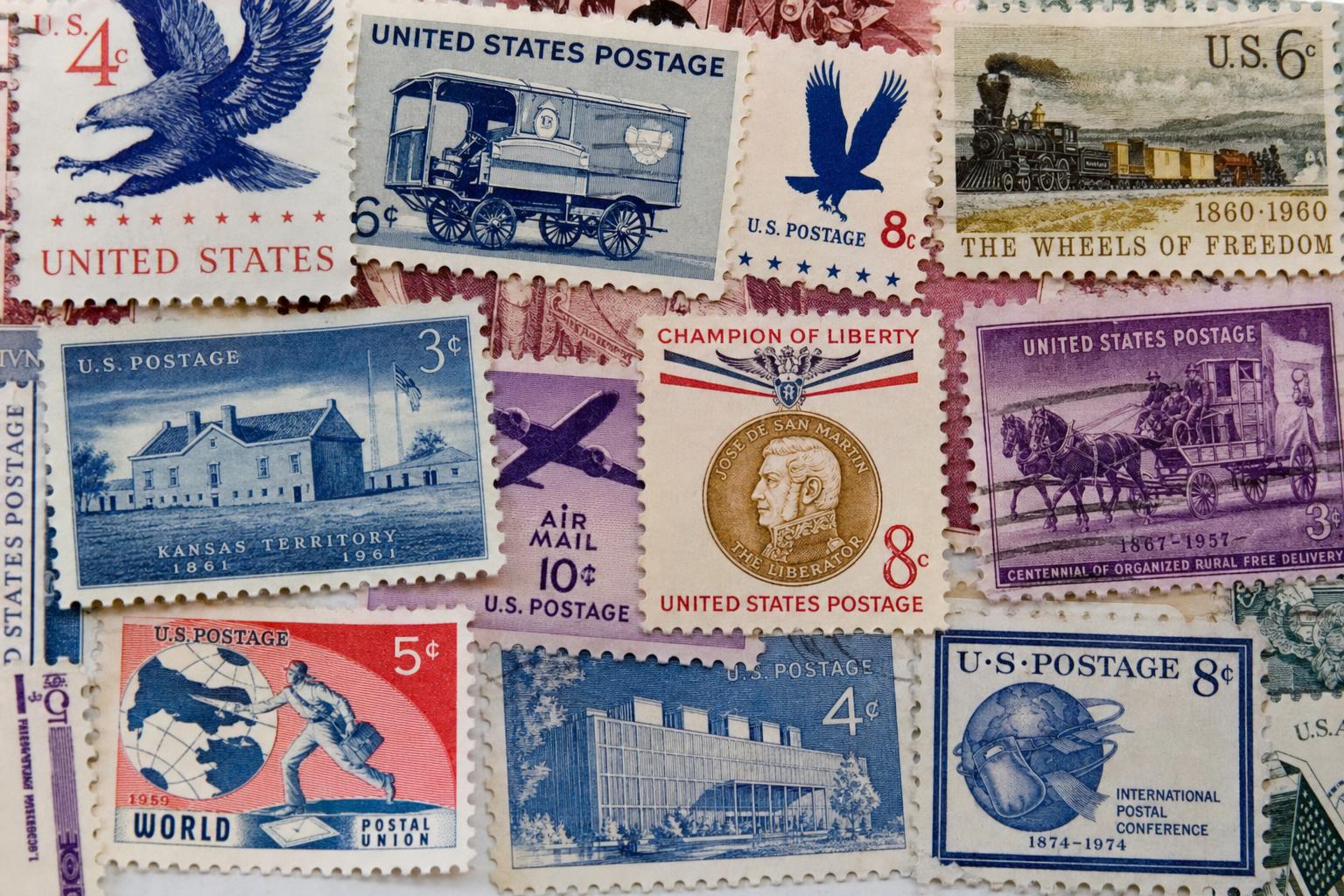
People who study stamps learn to read a postmark the way others read a map. A zip on a cancel tells you where that letter started, when it was processed, and often which machine handled it. That small cluster of digits changed how mail moved, how stamps were designed, and how the postal service thought about itself. This piece traces the zip code origins, ties them to stamp history, and picks out the USPS milestones that mattered most.
## Zip Code Origins: How They Entered Postal Practice
The phrase zip code origins describes a mix of small experiments, urgent operational needs, and the occasional visionary who pushed an idea until it stuck. In the 1940s and 1950s, city postal zones were a patchwork solution. New York got a “Manhattan 10” style notation during World War II to reduce misrouting in crowded urban networks. That system worked for big cities but failed for a rapidly suburbanizing nation.
The real push toward a national scheme came in the 1950s as mail volumes climbed. The Post Office Department faced a problem no flash slogan could fix: clerks were overwhelmed, delivery times stretched, and automation loomed. The ZIP concept aimed to group delivery areas into numeric buckets, letting sorting machines and carriers operate predictably. Robert A. Moon is often credited as the person who first sketched a numeric plan for zones. He argued for a concise, machine-friendly set of digits. His memo and others like it nudged the Post Office toward a standard that could be printed, punched, and read without a human stopping to think.
When the five-digit system debuted in July 1963 the change was dramatic. It was not just a new label pasted onto envelopes. It was an operational pivot: national routing tables were rewritten, regional distribution centers reconfigured, and the public was asked to help by writing a new set of numbers on every letter. The Post Office rolled out public-service ads, window signs, and, importantly for collectors, campaign stamps and special cancels that urged people to “Use ZIP Code.”
## Who Proposed The Numbers And Why
The origins of the numbers themselves are practical rather than mystical. The first digit indicated a broad geographic area, the next two refined that into a sectional center facility, and the final two pointed to a specific delivery office. This arrangement kept the codes short while preserving routing efficiency.
Those digits later became data. Postal clerks and engineers used them to identify congested routes and to plan trucks and planes. For stamp collectors, the digits created a new field of interest: stamps postmarked by ZIP rather than by city. Suddenly a cover from a tiny town with a brand-new ZIP could be as interesting as a commemorative hit from Philadelphia.
### How The Public Was Persuaded
Public education helped. The postal service paid for short TV spots, posters in post offices, and a steady stream of reminders printed on stamps and postal stationery. “Remember to use your ZIP Code” became as familiar as other civic exhortations of the era. It worked because people who mailed things saw tangible benefits: fewer returns, faster delivery, and more reliable business mail.
## Zip Code Origins In Stamp And Cancellation Design
Stamps are normally a way to pay for postage. They are also loud little advertisements. When ZIP codes came along the postal service used its own graphic tools to teach the public. That’s where stamp history intersects tightly with postal reform.
Early campaigns used slogan cancels, meter strips, and specially designed postal cards to show how to write the new codes. There were also issues that highlighted the ZIP concept visually. Designers favored bold numeric typography, arrows, and simplified maps, all intended to make the numbers feel useful rather than bureaucratic.
### Visual Language And Typographic Choices
Designers moved toward cleaner typefaces and numeric clarity. A busy pictorial stamp could look pretty, but it would not teach a postal sorter much. So the stamps and posters that pushed ZIP use were intentionally functional. They featured block numerals and clear layouts so the eye would learn what mattered: write the pin code in those boxes, place it here, and don’t crowd the address field.
This practical approach leaked into cancellations. Machine cancels began to include zip codes in readable form so that, decades later, collectors and postal historians could trace routes.
### Stamps As Educational Tools
Beyond the practical, stamps that referenced ZIP codes captured a cultural moment. They documented the postal service’s reliance on technology and public cooperation. Collectors prize covers that pair a commemorative stamp with a special ZIP-centered cancel because they tell a fuller story: the stamp indicates official commemoration, the cancel shows operational change.
## How Zip Codes Changed Mail Handling And Stamp Collecting
Before ZIP codes, routing decisions were based on city names, regional experience, and a lot of local knowledge. After they arrived, mail moved by database lookups and machine sorts. That shift had consequences for collectors.
One consequence: an entire subset of philately focused on machine cancels, postal meters, and automated markings. First-day covers evolved to include special cancels that noted the inaugural use of a ZIP in a region. Dealers and collectors started tracking the earliest known use of certain zip sequences as if they were new plate varieties.
Another consequence was the growth of thematic collecting around postal operations. Specialized collectors began assembling items related to postal zones, including proof materials for ZIP publicity, postal bulletins announcing changes, and covers that showed transitional usage where both old city zones and new ZIPs appeared. Those covers tell stories ordinary stamps do not.
### New Forms Of Evidence
Zip-related postal ephemera—training manuals, office decals, internal memos—became part of the record. A perfunctory strip of printer’s waste might show a zip code prototype, and archivists use those items to reconstruct the rollout. For serious collectors, those bits are more valuable than another commemorative issue.
#### Machine Cancels And Varieties
Machine cancels create their own collecting quirks. They are less about artwork and more about mechanics: misfeeds, misaligned numerals, and ink blots. These errors reveal how new machines coped with printing human-readable zip strings on flimsy envelopes. A crooked ZIP in a cancel is a small failure that became a collectible success when demand rose.
## USPS Milestones Connected To Zip Code Development
Thinking about zip code origins is also thinking about postal modernization. The ZIP system did not arrive in isolation. It was part of a sequence of changes that includes automation, reorganizations, and regulatory shifts.
### The Post Office Department To USPS
One of the big institutional milestones was the transformation of the Post Office Department into the United States Postal Service. That change became law in 1970 and took effect in 1971. It altered financing, management, and the public image of mail delivery. At a practical level it freed the service to invest in large-scale automation programs that made full use of ZIP-based routing.
### ZIP+4 And The Push For Greater Precision
The five-digit ZIP was an enormous step, but mailers wanted more precision. In 1983 the USPS introduced the ZIP+4 system, adding four more digits to identify delivery segments like city blocks, office buildings, or high-volume receivers. This extended code made automated sorting far more exact.
ZIP+4 changed business mail. Companies that could add the full nine-digit codes were rewarded with lower postage rates and higher throughput. It also led to a proliferation of new labels and pre-sorted mail categories, and it created another layer of postal documentation for collectors to study.
#### Barcodes And Automation
Barcodes came next. The Postal Numeric Encoding Technique, known as POSTNET, encoded ZIPs as a series of tall and short bars so machines could read them quickly. POSTNET was widely used for a few decades. Later, the Intelligent Mail Barcode combined routing and tracking information into a single, denser barcode, replacing POSTNET and offering more utility for sorting and analytics.
These technological shifts made ZIPs into a digital dataset that companies used for marketing, logistics, and analytics. For the USPS it meant new revenue opportunities but also new responsibilities: maintaining accurate databases and encouraging users to keep address lists current.
## How Stamps Responded To Automation And Data
As the postal network automated, stamps reacted in subtle ways. A stamp that once served only as postage became a component within an information system. Automated cancelers read the address block and the barcode, then applied a cancel that might include a date, a code for the machine, or the ZIP used during processing.
Collectors began cataloging these machine-applied marks as variants. Handstamps remained prized, but the variety and volume of machine-imprinted data created a secondary collecting market: items that show particular machine types, operator numbers, or unique ZIP failures.
### Postal Markings As Historical Records
Stamped covers and their cancels became a way to trace both human behavior and mechanical evolution. A 1970s envelope with a hand-canceled ZIP tells a different story from a 1990s envelope with a POSTNET barcode. Together they document the transition from human judgement to machine precision.
## Postal Campaigns, Stamps, And Public Memory
The postal service used stamps and marketing to embed ZIP codes into popular memory. Promotional stamps and envelopes tied to the ZIP rollout did double duty: they educated and created collectible artifacts. Over time, ZIP-themed issues also acknowledged the ongoing role of those digits in national life.
Large campaigns can be measured by their artifacts. A set of window signs, a commemorative postal card, and a widely distributed “how to write your address” sheet together show how the USPS marshaled design and messaging to make a technical change stick. Those materials are the kind that end up in scrapbooks and postal collections and later serve as primary sources for historians.
### Local Stories And Small-Scale Impact
Not all important moments were national. Local postmasters often made the ZIP system work on the ground, reorganizing routes and training carriers. Those local changes show up in covers, scrapbooks, and oral histories. A small-town postmaster might have redesigned walk routes, published new delivery maps, and issued an internal memo that later became a collectible item.
Collectors prize such local records because they reveal how the national ZIP plan actually functioned in the field. They show the gap between policy and practice and how people adapted.
## Why Zip Code Origins Still Matter For Collectors And Historians
The phrase zip code origins suggests a single moment, but the reality is an ongoing process. Those early choices about numbering and routing ripple forward. They shaped how mail flows today and how postal history is archived.
For collectors, the ongoing interest comes from variety: different cancels, machine types, mismatched numbering, transitory use where both old zones and new ZIPs appear on a single cover. For historians, the ZIP evolution is a case study in implementing a large-scale technical change across a population that relied on analog routines.
### Practical Evidence In the Archive
Postal bulletins, internal memos, and the physical objects produced for the ZIP rollout make good archival material. They show day-to-day decisions and reveal the compromises that had to be made. Studying them gives a better sense of how infrastructure changes when they are not simply decreed but taught to millions of everyday people.
#### Where To Look For Items
Collectors and researchers find meaningful items in regional postal museums, local post office attics, and private collections. Auction catalogs sometimes surface rare postcards or training leaflets. If you want to learn the nuts and bolts, start with actual covers dated around July 1963 and watch what their cancels and address blocks say. You can read zip code origins in ink and paper.
## Everyday Effects On Mail And Design
Beyond philately and postal operations, ZIPs changed how Americans addressed envelopes, how businesses managed databases, and how advertisers thought about geography. The five-digit number became a shorthand for neighborhood identity. It appears on packaging, marketing campaigns, and data sets. That cultural footprint is part of zip code history in the broad sense.
ZIPs shaped logistics, enabling complex networks of supply and delivery that are now the backbone of e-commerce. They reduced ambiguity in addresses and created a language for location that both machines and humans could use. Even the ways designers set type for envelopes changed because numerical clarity mattered.
## Unusual Tales From Zip Code Rollout
There are small stories that reflect the awkwardness of large change. In some towns the postmaster resisted, preferring old habits. In others residents invented local nicknames for their ZIP. There were errors in early routing tables that sent mail on scenic detours across several states. Those misadventures produced covers collectors now seek, because they record a system stretching and learning.
People also adapted creatively. Some businesses added pre-printed address labels with ZIPs before consumers were ready. Others used the zip as a marketing hook: “Call us for fast service—ZIP 12345.” Those ephemeral choices ended up in scrapbooks and corporate archives and now help tell the story.
## The Ongoing Story: Data, Codes, And Postal Culture
Zip code origins began as operational thinking and quickly became cultural. The digits are now a data layer that industries tap for everything from marketing to emergency response. For the postal service, the challenge continues: keep the databases accurate, maintain public awareness, and balance tradition with efficiency.
For stamp collectors the digital era presents new questions. How do you collect what’s primarily electronic? How do you preserve barcode variants or machine-readable marks that are never printed on a traditional stamp? These are the new puzzles that follow from old decisions about those five digits.
For anyone interested in postal history, the zip code story is useful because it shows how a small change in notation can cascade into design, technology, and culture. If you want to study a single artifact that shows that cascade, pick a cover where the stamp, the cancel, and the address all speak to a moment of change. Look close and you will see the zip code origins written in everyday materials—postage, paper, and ink—recieved and sent on a journey across the network.
#### Where To Go Next
Find a postal museum, a local archive, or an online auction site and start pulling covering material from the 1950s through the 1980s. Compare early slogan cancels to machine cancels from the 1990s. Look for transitional pieces that show both old city zones and the new five-digit strings. Those items will give you an immediate, tactile sense of how zip codes moved from plan to habit, and how a stamp can be more than art: it can be evidence.
Leave a Reply