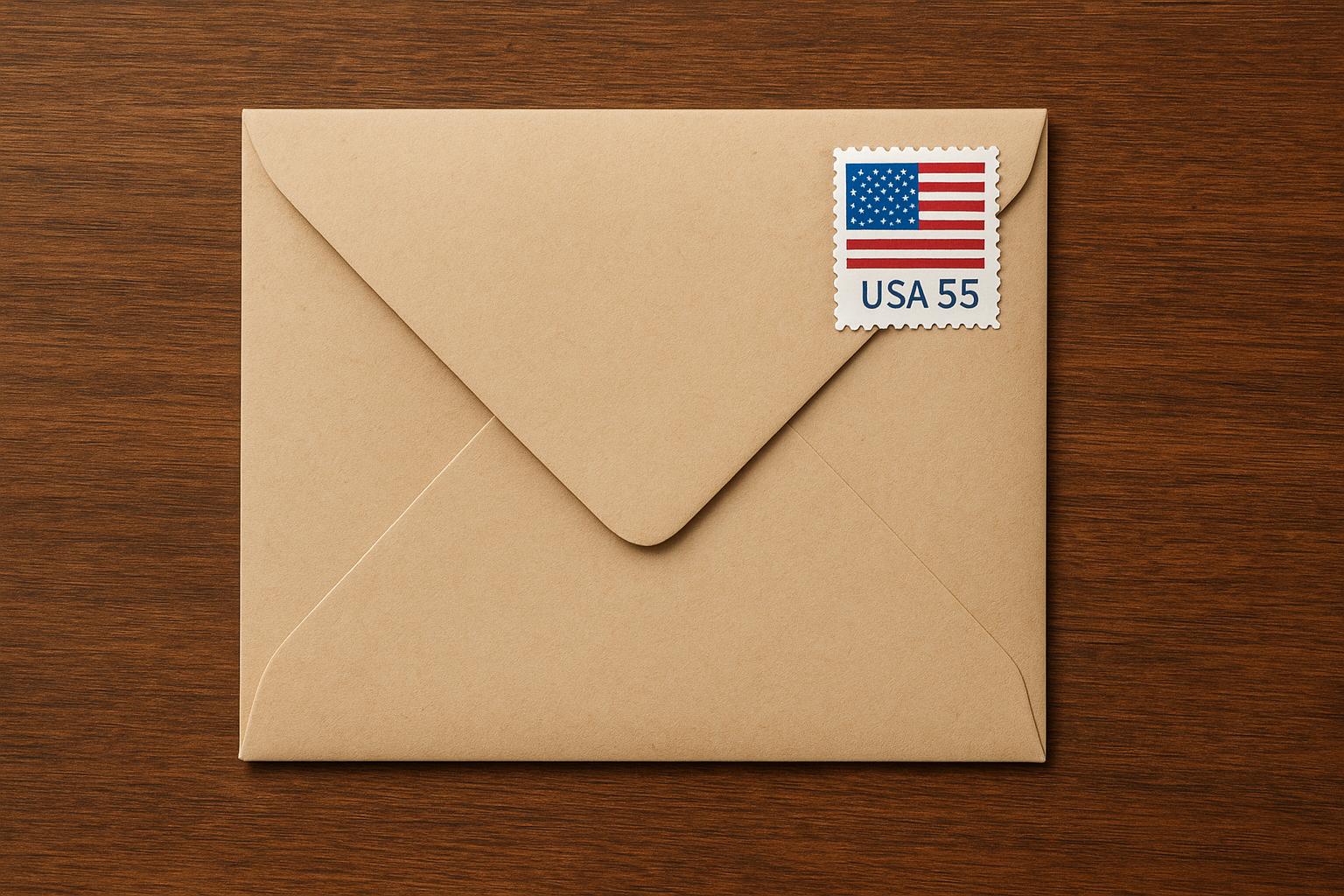
Square envelopes catch people off guard. They change how machines handle mail, how postage is calculated, and whether your piece ends up delayed or neatly delivered. If you send anything short-run, handmade, or oddly shaped, you need to know the rules so you don’t lose money or time.
## Square Envelope Postage Guidelines You Need To Know
Post offices treat square mail differently because sorting machines expect rectangles. Those machines push, roll, and bend envelopes. A square envelope can jam, slide awkwardly, or trigger a nonmachinable fee. These square envelope postage guidelines exist so senders apply the right postage and avoid surprises.
### How Postal Systems Decide Postage
The basic factors are size, shape, thickness, and weight. For a standard First-Class stamp you need a rectangular, flexible envelope that fits machine parameters. If your item is square, rigid, or over a certain thickness, postal clerks will mark it nonmachinable. That designation means extra postage and sometimes a trip to a slower processing lane.
– Weight: Measured in ounces. A standard First-Class stamp covers one ounce for a rectangular, machinable envelope.
– Size: Length and height must be within specific ranges for automation.
– Thickness and Flexibility: Items that are too stiff, too thick, or square-shaped often get surcharged.
### Exact Measurements You Should Watch
Measure your piece flat. Round up to the nearest eighth of an inch. Postal rules vary slightly by country, but here are the practical thresholds to watch for:
#### Domestic Machinable Size Limits
– Minimum: About 3.5 inches by 5 inches.
– Maximum: Typically 6.125 inches by 11.5 inches for machined letters.
– Thickness: Between 0.007 inch and 0.25 inch is generally acceptable for standard letter rates.
A 6-inch by 6-inch greeting card square falls right in the danger zone. It’s within size limits for some categories, but its square shape can trigger nonmachinable handling even if dimensions pass.
### Nonmachinable Fees And Why They Apply
Nonmachinable is not a punishment. It reflects complexity. Clerks and machines need predictable items to keep sorting moving. When something is square, stiff, or irregularly sealed, it takes manual handling. That means labor and time, which translate into fees.
Common reasons for nonmachinable classification:
– Square shape that does not align with roller-based sorters.
– Stiff contents like thick cardstock or multiple pages.
– Items with clasps, buttons, or other protrusions.
– Envelopes that are taped heavily or have uneven edges.
Labeling your package correctly as nonmachinable can save an embarrassing postmark at the counter. But if you mislabel, post office staff will adjust postage and charge you the difference.
### Practical Steps To Minimize Extra Charges
You can often avoid surcharges with a few changes that won’t ruin the look of your mail.
#### Make It Flexible
If possible, use thinner paper or multiple sheets instead of one thick card. A little flexibility goes a long way. If the item is a small print, wrap it in flexible tissue before slipping it into a square envelope.
#### Opt For A Slight Rectangle
Move from a perfect square to a slightly rectangular shape. Increase either width or height by a quarter inch. It sounds picky, but that tiny change can make your piece machinable.
#### Use Rigid Mailers For Heavier Items
If the contents are inherently stiff—like a metal pin, thick booklet, or layered art—use a small rigid mailer and accept parcel rates. It’s often cheaper than paying repeated nonmachinable fees on light but stiff pieces.
### Addressing And Stamp Placement Tips
A square envelope gives less real estate for the address zone. Keep the delivery address centered and readable with a clear zone around it. Use printed labels when possible. Don’t place stamps over seams or near clasps. Stamps need to be in the upper right and flat. Wrinkled or overlapping stamps raise red flags. I once saw a hand-addressed 5×5 envelope returned because the stamp covered part of a glued flap. Fixable, but frustrating for sender and recipient.
### International Considerations
International mailers have stricter rules and higher surcharges. Square pieces may be allowed, but expect higher rates and a slower journey. Customs forms must be attached cleanly. For international postcards or letters, double-check the foreign mail manual or the carrier’s site. Choosing a slightly rectangular envelope saves money and avoids the customs complications that come with unusual shapes.
### Real-World Examples That Matter
Imagine you make hand-printed art cards, 6 inches by 6 inches, sold online. You can:
– Switch to a 6 x 6.25 inch envelope and pay standard letter price when it meets flexibility rules.
– Keep the square but accept nonmachinable postage and higher fees.
– Upgrade to a rigid mailer and use flat or parcel pricing, which is predictable for heavier pieces.
I ship small runs of prints. When I switched from square to slightly rectangular envelopes, customer service issues dropped. No jams at the sorter. No extra postage notices. Small change, big difference.
#### When To Visit The Post Office Counter
If you’re in doubt, bring a sample. Clerks can weigh and evaluate machinability. Don’t assume online postage calculators catch shape-based surcharges. They calculate weight and size, but shape is a judgment call. A quick in-person check prevents your parcel from getting flagged after it leaves.
### Alternatives To Traditional Stamps
Prepaid flat-rate envelopes and printed postage services can simplify things. Flat-rate only helps if your item fits the envelope and the cost compares favourably to nonmachinable fees. Online postage providers sometimes allow you to label items as nonmachinable with your order, but if they misjudge and the carrier upgrades postage, you could face additional charges.
### Avoid These Common Mistakes
– Mailing a stiff square without checking thickness. This is the most common trap.
– Overdecorating a square envelope with glue, glitter, or layered embellishments. Those add bulk and can ruin automated processing.
– Trusting a single First-Class stamp without confirming machinability. The weight might be fine but the shape will cost you.
### Preparing For Bulk Mailing
If you send dozens or hundreds of square envelopes, talk to your carrier about a bulk mailing plan. Sortation contracts and presorted rates exist exactly for reducing manual handling costs. Properly prepared flats and trays move faster and cost less per piece. Even for small businesses, a mailing permit and a little prep work can erase per-piece surprises.
## What To Do When You Get Charged Extra
If you receive a notification about underpaid postage, contact the carrier and ask for details. If the item was marked incorrectly by staff, you may get a refund or credit. Keep samples and photos for disputes. And adjust your next batch based on the feedback.
### Final Practical Notes On Square Envelope Postage
Square envelope postage guidelines are not a mystery. They are a set of predictable rules driven by machinery and common sense. Think less about rules as obstacles and more as technical specs. Measure carefully, choose materials with flexibility in mind, and when in doubt, change the dimensions slightly or talk to the counter. A small tweak will save time, money, and a lot of email exchanges with reciepients wondering where their card went.
Leave a Reply