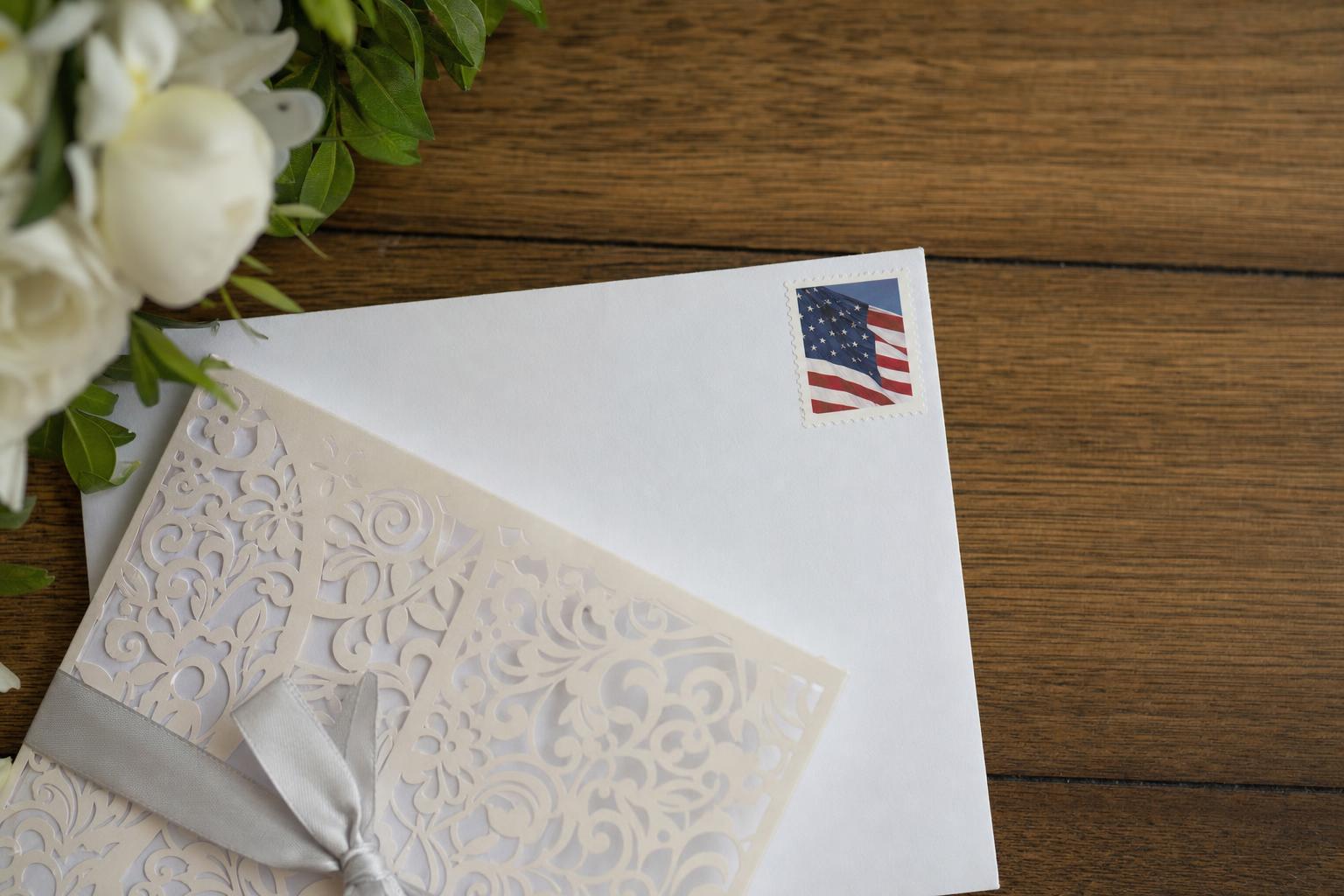
Don’t assume one stamp covers every invite. Shape, weight and extras change what you need. Send the wrong amount and guests get a delayed RSVP or a returned envelope. That’s annoying, but avoidable.
## Greeting Card Postage Requirements: The Basics
When people search “greeting card postage requirements” they’re usually asking three things: how much postage, what size/shape rules apply, and whether enclosures like RSVP cards change the rate. Those are the right questions. The short answer: the standard first-class stamp typically covers a single-piece, rectangular letter that weighs up to 1 ounce. Add weight, odd shapes, or extra pieces and you’ll need more postage.
Post offices classify mail by size and weight. A standard letter is within certain length and height limits and is uniformly thick with no square corners or rigid parts. Anything outside those bounds becomes a large envelope (flat) or a package. The difference matters because rates jump when you cross categories.
### How Size And Shape Affect Postage
Size is more than length across. Envelopes that are square, rigid, or unusually thick can be nonmachinable. Nonmachinable items often require extra postage because they can’t go through automated sorting equipment. That’s why a heavy card with layers of glitter or foam can cost more even if it fits in a standard envelope.
Common traps:
– Square envelopes: They often need extra postage even when light.
– Heavy cardstock: A beautiful thick invite might weigh more than 1 ounce.
– Layers and attachments: Belly bands or wax seals can make an envelope nonmachinable.
#### Weighing Your Invitations
The only safe way to know is to weigh a finished invitation—envelope, insert, postage, RSVP card, everything. A kitchen scale is fine for a quick check. For mailing a batch, weigh one assembled invite, then multiply. That gives you a reliable postage estimate before you print hundreds.
## Calculating Invitation Postage For Different Formats
Invitation postage changes depending on format. A single folded invitation with one RSVP card is usually still a letter if it meets size and weight rules. A pocketfold with multiple inserts is more likely to exceed the 1-ounce mark and push you into additional ounce fees or into the “flat” category.
If your invitations are postcards, they require less postage than envelopes but have strict size rules. If they’re heavy or oversized, you’ll pay more. For hand-addressed envelopes, remember that cursive and ornamentation don’t affect postage — only physical attributes matter.
### Common Invitation Configurations And What They Cost
– Single card in standard envelope: Often one stamp if under 1 ounce.
– Card plus RSVP and details: Usually needs extra postage if total weight exceeds 1 ounce.
– Thick cardstock or layered invites: May require additional ounce stamps or be charged a flat/parcel rate.
– Square or unusually shaped envelopes: Add nonmachinable surcharge.
#### Metered And Prepaid Options
If you’re mailing hundreds, metered postage or a postage permit can save time and look neat. Many printers offer to output postage directly on envelopes. But even with metered mail you must follow the same weight and size rules. Don’t assume a bulk solution bypasses the basic greeting card postage requirements.
## How To Test Postage Without Surprises
Take a sample through the system. Bring a handful of finished invites to the post office and ask them to weigh and process one. They’ll tell you exactly how much postage is required and whether the envelope is nonmachinable. That live test catches odd issues like folds that push the thickness over the line.
Use online postage calculators only as a rough guide. They’re handy for estimating but don’t always flag nonmachinable issues. If your design uses ribbons, vellum overlays, or glued-ons, go to the counter.
### Tips For Keeping Invitation Postage Low
Trim the extras. Swap heavy cardstock for lighter stock. Replace a belly band with a single band of printed ribbon. Use an RSVP postcard instead of a separate return envelope. Those changes can keep your set under the 1-ounce limit and save money across a big guest list.
Also consider size. A rectangular invitation sized to standard letter limits will be cheaper to mail than a square or custom die-cut piece.
## International And Special Considerations
International invitation postage is a different beast. Countries have different rates and rules, and customs forms may be required if you’re including gifts or non-paper items. For invites sent abroad, weigh and declare properly at the post office; don’t guess.
If you plan to send RSVPs from overseas, include a pre-addressed, stamped return envelope with adequate international postage. That saves your guests from having to figure out rates themselves.
### Addressing And Presentation
Hand-written addresses don’t change the postage. But the way you seal and present envelopes can. Make sure glue is secure; loose inserts can fall out and cause returns. Clear, legible addressing reduces handling time and potential delays.
## When To Ask Your Printer Or The Post Office
If your invitation has anything custom—foil stamping, layers, unusal trims—get the post office involved early. Printers can also advise because they handle dozens of mailings and know what typically trips postage rules. Ask them to produce a final sample you can weigh.
Don’t rely on “that looks about right.” A batch of invitations with a tiny weight overage can add up to an unexpected bill. Work it out before the big print run.
## Practical Checklist Before You Mail
– Weigh a finished, sealed sample.
– Confirm whether the envelope is machineable.
– Check for multiple pieces or attachments that increase weight.
– Test a sample at the post office counter.
– Decide between forever stamps, metered postage, or bulk permit.
Follow those steps and you’ll dodge most common mistakes. And you’ll spare your guests the annoyance of delayed invites or missed events becuase of postage.
Leave a Reply