## Who Was On The First Us Postage Stamp
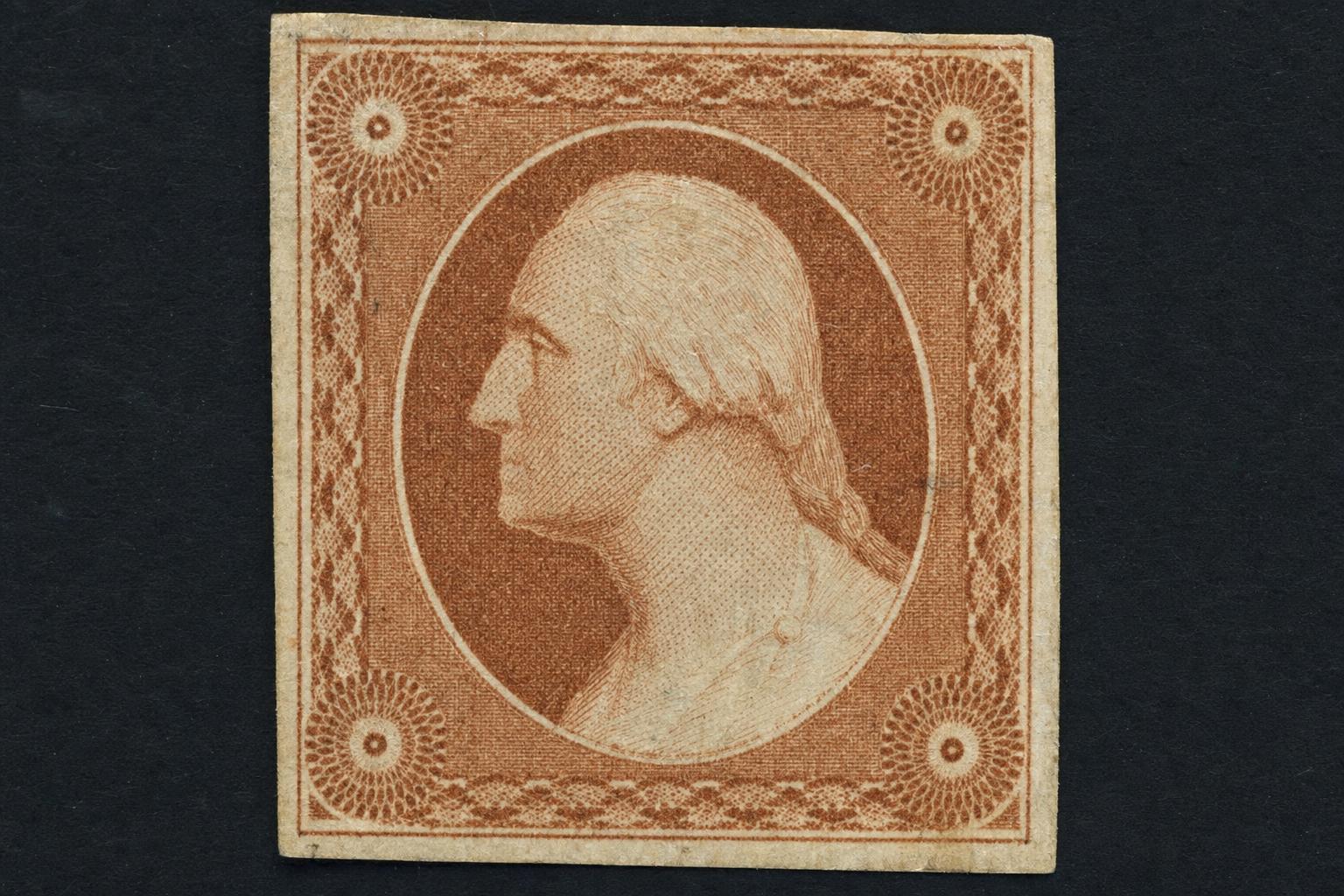
The short answer: two men. The U.S. government issued its very first stamps on July 1, 1847 — a 5-cent stamp featuring Benjamin Franklin and a 10-cent stamp showing George Washington. If someone asks “who was on the first us postage stamp,” the clean reply is Franklin and Washington, with the 5-cent Franklin often treated as the more familiar face because of its lower denomination and wider usage.
The tiny pictures mattered. The 5-cent Franklin paid the typical single-rate letter up to 300 miles; the 10-cent Washington covered longer distances. Those rates came from the 1845 postal reforms, and the new adhesive stamps were the practical follow-up. Collectors and historians call these the 1847 us stamp issue, and they’re the real beginning of U.S. stamp collecting.
## Why Franklin And Washington Were Chosen
These two men weren’t random picks. Benjamin Franklin was the first Postmaster General for the colonies and then served in the early continental postal system. He was a living symbol of postal administration and printing expertise. George Washington, of course, was the founding general and first president, an emblem of national unity. Put them together and you had credibility and recognition printed on every envelope.
When people debate “who was on the first us postage stamp,” they’re also really asking why those images were chosen to represent the new federal postage system. The answer blends practicality and politics: the postal service wanted familiar, respectable figures who could legitimize the new stamps in the eyes of a skeptical public.
### The 5-Cent Franklin Design
The 5-cent Franklin is the one most people picture when they think of the 1847 us stamp. It was printed in a reddish-brown and shows Franklin in a three-quarter profile. The portrait came from existing engraved likenesses used in books and currency. The stamp is imperforate, meaning the sheets were cut with scissors or a blade — no perforations between stamps yet.
Because the 5-cent rate applied to the majority of domestic letters, the Franklin stamp shows up on more surviving covers and pieces. That ubiquity makes it familiar, but not necessarily cheap. Clean, unused examples are rare.
### The 10-Cent Washington Design
The 10-cent Washington was printed in black and used for higher-distance mail. It’s slightly less common on covers since fewer letters required the higher rate. The portrait style mirrors mid-19th-century engraving practices: formal, restrained, and intended to convey dignity rather than motion or character.
Both stamps were printed by private engraving firms under contract to the Post Office. They arrived at a time when the idea of paying postage in advance — by sticking an adhesive to an envelope — was still new in American daily life.
## How Collectors Treat The First Postage Stamp Issue
If you search “who was on the first us postage stamp” in auction catalogs, you’ll find listings for both denominations. Collectors separate 1847 us stamp material into used and unused, into plate varieties and margins, and into covers with clear rate markings. An unused 1847 stamp, never hinged and with full original gum, is far rarer and more valuable than one that was used on a letter.
Postmarks also tell stories. A neat town name and date can turn an ordinary 5-cent Franklin into a documented piece of postal history. On the other hand, a damaged or heavily cleaned stamp loses value fast. Condition rules.
#### How To Identify An 1847 Us Stamp
Look for these basic signs: the stamps are imperforate, printed on relatively thick paper, and use the design styles of the mid-1800s. The 5-cent is reddish-brown; the 10-cent is black. Check the margins — they’re often irregular because sheets were cut by hand. Authentic cancellations usually show town names and dates from the 1840s and 1850s. Modern forgeries exist, so consult a specialist or a reliable reference if a piece looks suspiciously cheap.
The phrase “first postage stamp” can trip people up: some assume the U.S. had one single first face. But in practical terms the 1847 issue included those two stamps together, so both count as the first postage stamp release in America.
## Common Questions About Who Was On The First Us Postage Stamp
Q: Was the 5-cent Franklin issued before the 10-cent Washington?
A: They were released on the same date, July 1, 1847. In daily use, the 5-cent Franklin appears more frequently, so it often feels like the primary “first” stamp.
Q: Were there other faces considered?
A: The postal authority favored figures who symbolized trust in the system. Beyond Franklin and Washington, other famous Americans appear on later issues, but the 1847 selection was focused and conservative.
Q: How rare is a complete, unused 1847 us stamp?
A: Extremely rare compared with later issues. Few examples survived in mint condition because people used the stamps to send letters. Prices reflect that scarcity.
Q: Does the phrase “who was on the first us postage stamp” ever mean some other stamp?
A: Sometimes people refer to the first adhesive stamp produced by any authority on U.S. soil, including provisional or local issues before 1847. But officially the 1847 federal release is the recognized “first postage stamp” series for the United States.
## Small Details That Tell A Big Story
Look closely at a franked cover from 1847 and you’ll see a small window into daily life: hand-written addresses, the ink of the postmark, the rate marking. A 5-cent Franklin on a folded letter from a small New England town shows ordinary commerce. A 10-cent Washington on a coast-to-coast route hints at longer-distance networks. Those differences explain why collectors chase specific usages as much as the faces themselves.
Benjamin Franklin and George Washington made a practical pairing. Franklin represented the craft and infrastructure of mail; Washington represented the new nation. Asking “who was on the first us postage stamp” is really asking which two images Americans first trusted enough to glue to their mail. The answer is simple, but the stories stuck to each stamp are many.
If you ever handle one in real life, check the color, the margin edges, and the cancellation. Hold it up to light. You can feel the era in the paper fibers and the engraved lines. It’s not just an image of a famous man — it’s a small, tangible step in how Americans began to communicate at scale, one letter at a time. The famouse faces on those little pieces of paper made that step official.
Leave a Reply